Table of Contents
- Why the Expensive Remodel Myth Won't Die
- Where Your Money Actually Goes
- High-Impact Updates That Don't Require a Full Gut Renovation
- Planning Smart Before Demolition Day
- What to DIY and What to Leave Alone
- Smaller Bathrooms Punch Above Their Weight
- Efficiency Upgrades That Pay You Back Over Time
- Financing Options Worth Knowing About
- The Real Return Is Everyday Life
- Sources
Bathroom Remodels Are More Affordable Than You Think
Think a bathroom remodel has to cost a fortune? Think again. Upgrading your bathroom can be far more affordable than you ever imagined, and the payoff in comfort, style, and home value makes now the perfect time to start planning.
Why the Expensive Remodel Myth Won’t Die
It’s mostly television’s fault, honestly. Renovation shows love a dramatic reveal with custom stone vanities, heated travertine floors, and rain showers imported from somewhere expensive. Those spaces are gorgeous, no argument there. But they represent the ceiling of bathroom remodeling. Not the floor. Most homeowners never need to go anywhere near that territory to end up with a bathroom they genuinely love.
The myth persists because worst-case stories travel fast. A neighbor’s remodel went $15,000 over budget. Someone’s contractor disappeared mid-demo. Those stories stick. What doesn’t circulate as freely are the thousands of homeowners who updated their bathrooms for $4,000 to $8,000, stayed on budget, and now can’t imagine going back to the old avocado-green tile. Fixr’s 2025 bathroom remodel ROI analysis found that midrange bathroom remodels now recoup an average of 80% of their cost at resale, the highest return since 2007, meaning you’re not just spending money but building equity.
Where Your Money Actually Goes
Labor eats the biggest share of most bathroom budgets, often 40 to 65 percent of total costs. That figure climbs steeply when plumbing or electrical systems need to be moved. Here’s the thing most contractors won’t lead with: keeping your existing layout is the single most powerful cost-control decision you can make. When the toilet, sink, and shower stay in their current positions, you sidestep costly plumbing reconfigurations entirely. That one choice alone can save several thousand dollars before you’ve even picked a tile.
Materials are the second major variable, and they’re highly controllable. Natural stone is beautiful but carries a premium that’s hard to justify when high-quality porcelain mimics the look almost perfectly at a fraction of the price. Quartz countertops offer durability and visual elegance without the sealing requirements of marble. Thoughtful substitutions like these are where smart remodelers find the most breathing room in their budgets. It’s not about settling. It’s about choosing strategically.
High-Impact Updates That Don’t Require a Full Gut Renovation
You’d be surprised how far targeted cosmetic updates can stretch. A fresh coat of moisture-resistant paint transforms a dingy bathroom faster than almost any other single change, and the whole project can cost under $100 if you do it yourself. Swapping outdated light fixtures for modern LED options takes an afternoon and meaningfully changes how the space feels, both aesthetically and functionally, since LEDs run cooler and cost less to operate long-term.
Hardware is criminally underrated. Replacing cabinet pulls, faucets, and towel bars in a coordinated matte black or brushed nickel finish can make a ten-year-old vanity look intentional and current. Prefabricated vanities from retailers like The Home Depot come in a range of styles and sizes that suit most standard bathrooms without the wait or expense of custom cabinetry. And if your tub or shower enclosure is structurally sound but cosmetically rough, stained, scratched, or just dated, refinishing rather than replacing it can restore a like-new appearance for roughly $300 to $600, compared to $1,500 or more for a full replacement.
Planning Smart Before Demolition Day
The remodels that go sideways almost always have one thing in common: they started without a clear purpose. Are you updating to attract buyers? Creating a more functional space for a busy household? Carving out a personal retreat? Your answer shapes every spending decision that follows. A buyer-focused remodel prioritizes neutral finishes and broad appeal. A family-focused one might prioritize durable surfaces and smart storage. Knowing the goal upfront keeps you from drifting toward expensive choices that don’t actually serve your needs.
Set a real budget, not an aspirational one, and build in a 15 to 20 percent contingency. That buffer isn’t pessimism; it’s just arithmetic. Behind walls and under floors, surprises happen. Old water damage. Outdated wiring. The contingency fund is what separates a manageable inconvenience from a financial emergency. The National Association of Home Builders offers solid resources for vetting contractors and understanding what realistic local pricing looks like, which is invaluable before you start collecting bids.
Timing your remodel matters more than most people realize. Contractors have slower seasons, typically late fall and winter in most regions, and competitive pricing tends to follow lower demand. Flexibility on start date can translate directly into savings on labor costs.
What to DIY and What to Leave Alone
This is where a lot of homeowners either save serious money or create expensive problems for themselves later. Painting, hardware swaps, mirror installation, and basic accessory replacement are all realistic DIY territory for most people with moderate skill and patience. Some straightforward tile work is also manageable with the right prep and willingness to learn. Houzz is genuinely useful here, not just for design inspiration but for step-by-step guidance on smaller projects that help homeowners understand scope before committing.
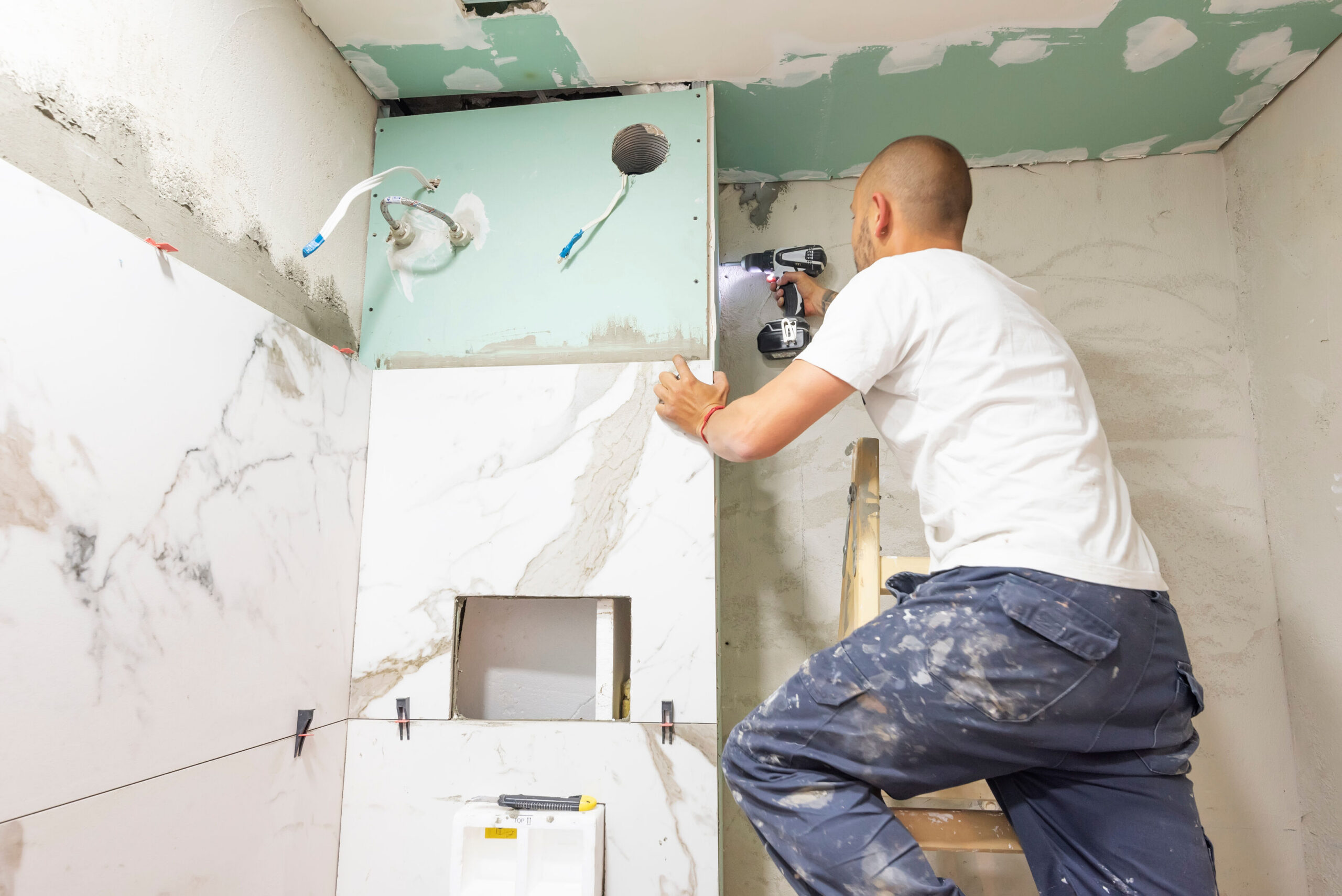
Plumbing and electrical work, though? Leave those to licensed professionals, full stop. The cost of fixing a botched DIY plumbing job, especially if it leads to water damage inside walls, almost always exceeds whatever was saved by not hiring someone in the first place. A hybrid approach where you handle cosmetic work and professionals handle mechanical systems tends to produce the best combination of savings and long-term quality.
Smaller Bathrooms Punch Above Their Weight
If you’re working with a powder room or compact full bath, the numbers get even friendlier. Less square footage means fewer materials, less tile, and reduced labor time across the board. Smaller spaces also let you justify splurging on one or two elevated design elements, like a striking wallpaper or a decorative tile accent wall, that would be prohibitively expensive in a larger room. You’re buying two or three square feet of a premium product instead of forty.
Floating vanities, frameless mirrors, and space-saving fixtures can elevate a small bathroom dramatically without inflating the budget. For homeowners new to remodeling, a compact bathroom is genuinely the ideal starting project. Manageable scope, faster timeline, and enough transformation to build confidence for bigger projects down the road.
Efficiency Upgrades That Pay You Back Over Time
An affordable remodel isn’t only about keeping upfront costs low. It’s also about reducing what you spend over the following years. Water-saving toilets, faucets, and showerheads certified through the EPA’s WaterSense program can cut household water usage significantly without any noticeable drop in performance. LED lighting reduces electricity consumption and lasts far longer than incandescent alternatives. Better ventilation prevents moisture buildup that leads to mold, which if left unchecked becomes a repair bill that dwarfs whatever the remodel cost in the first place.
These aren’t luxury additions. They’re practical choices that make the room cheaper to run and easier to maintain for years after the last contractor has left.
Financing Options Worth Knowing About
If upfront costs are still a sticking point, don’t let that stop the conversation. Home equity loans and lines of credit frequently offer competitive interest rates for homeowners with available equity. Some contractors work with financing partners who can spread costs over manageable monthly payments. In certain regions, utility rebates or local incentives exist specifically for energy-efficient fixture upgrades, which can lower the net cost further.
The key is approaching financing the way you’d approach any other spending decision, carefully, with a clear picture of what the monthly obligation looks like against your actual income. Done responsibly, financing a bathroom remodel is a reasonable path to getting improvements made now rather than postponing them indefinitely while the space continues to age.
The Real Return Is Everyday Life
Numbers matter, but they don’t capture everything. A remodeled bathroom changes how your mornings feel. Better organization, better lighting, a shower that doesn’t feel like a consolation prize. Those things add up in ways that don’t show up on a cost-vs-value spreadsheet. From a resale standpoint, buyers scrutinize bathrooms closely, and an updated one signals that a home has been genuinely cared for. Even modest improvements shift perception in meaningful ways.
The luxury-budget myth has kept too many homeowners stuck in bathrooms they don’t enjoy for too long. With a clear plan, smart material choices, and a realistic sense of what’s DIY-able and what isn’t, a bathroom remodel is far more within reach than most people assume. Start with your space, set your number, and take the first step. The gap between your current bathroom and a better one is probably smaller than you think.