Table of Contents
Low-Cost Noise Reduction Solutions for Apartments and Shared Homes
Noise is one of the most consistently underestimated quality-of-life factors in shared living situations, and one of the hardest to address once you’re already in a space. Whether it’s sound traveling between floors, voices carrying through thin walls, street noise penetrating windows, or the general acoustic chaos of a household where multiple people are trying to do different things simultaneously, the effect on daily life — on sleep quality, concentration, stress levels, and the general sense of having any private space at all — is significant enough that it deserves practical attention rather than just resignation. The good news is that meaningful noise reduction doesn’t require construction, permits, or a landlord’s approval in most cases, and the most effective solutions cost considerably less than most people assume.

Understanding How Sound Actually Travels
Addressing noise effectively requires understanding the basic mechanics of how sound moves through a building, because the right solution depends entirely on which type of sound problem you’re dealing with. Sound travels in two fundamentally different ways: through the air as airborne sound waves, and through physical structures as impact or structure-borne vibration. These require different interventions, and applying the wrong solution to the wrong problem produces disappointing results.
Airborne sound — voices, music, television, street noise — travels as pressure waves through air and passes through walls, windows, and gaps wherever air can move. The primary defense against airborne sound is mass and absorption: dense, heavy materials slow and absorb sound waves, while soft materials convert sound energy into heat through friction. Structure-borne sound — footsteps on the floor above, bass frequencies from speakers, the thud of a door closing — travels through the physical building materials themselves and is considerably harder to address without construction. It requires decoupling the surface generating the vibration from the structure transmitting it, which in practice means soft materials between the vibration source and the surface — rugs, felt pads, rubber mounts — rather than anything added to walls or ceilings.
Most noise complaints in apartments and shared homes involve some combination of both types, which is why a single solution rarely eliminates the problem entirely and why layered approaches consistently outperform single interventions. The Acoustical Society of America’s public resources provide accessible explanations of both sound types and the principles behind different reduction strategies, which is useful background for anyone trying to diagnose a specific noise situation before deciding where to invest effort and money.
Rugs and Soft Furnishings as the First Line of Defense
For renters and people in shared homes, the most immediately impactful and universally applicable noise reduction investment is also one of the most affordable: area rugs with thick underlays on hard floors. Hard flooring surfaces — hardwood, laminate, tile, concrete — reflect sound rather than absorbing it, which amplifies both the transmission of footstep noise to units below and the acoustic chaos within the room itself as sound bounces between hard surfaces. A large area rug with a quality rug pad underneath addresses both problems simultaneously: it absorbs impact before it enters the floor structure, reducing what travels downward, and it adds absorption within the room that reduces reverberation and the general sense of acoustic hardness.
The rug pad matters as much as the rug itself for noise reduction purposes. A dense rubber or felt-rubber combination pad creates a decoupling layer between the rug and the floor that absorbs impact energy more effectively than a thin pad or no pad at all. For maximum effect, the rug should cover as much of the floor area as practical — a small rug in the center of a large room does relatively little for the hard floor surfaces surrounding it. In rooms with particularly noisy upstairs neighbors, placing furniture with soft feet on the rug rather than directly on the hard floor adds another decoupling layer that further reduces structure-borne transmission.
Beyond rugs, the general principle of adding soft surfaces to a room improves its acoustic character in ways that reduce the perceived intensity of noise. Upholstered furniture, curtains and drapes, wall-mounted fabric panels, bookshelves filled with books, and even large houseplants all contribute to sound absorption that reduces reverberation and makes a space feel acoustically quieter without changing the actual sound entering from outside. A room with substantial soft furnishings simply sounds calmer and more contained than a sparsely furnished hard-surface room receiving the same amount of external noise.
Sealing Gaps and Improving Windows
One of the most cost-effective noise reduction measures available — and one of the most commonly overlooked — is identifying and sealing the gaps through which airborne sound travels most freely. Sound, like air, takes the path of least resistance, and a wall with even small gaps around electrical outlets, pipe penetrations, or poorly sealed trim can transmit significantly more sound than a solid wall would suggest. The same principle applies to doors and windows: a door with a gap at the bottom, or a window that rattles slightly in its frame, is a substantially larger sound conduit than its physical size would imply.
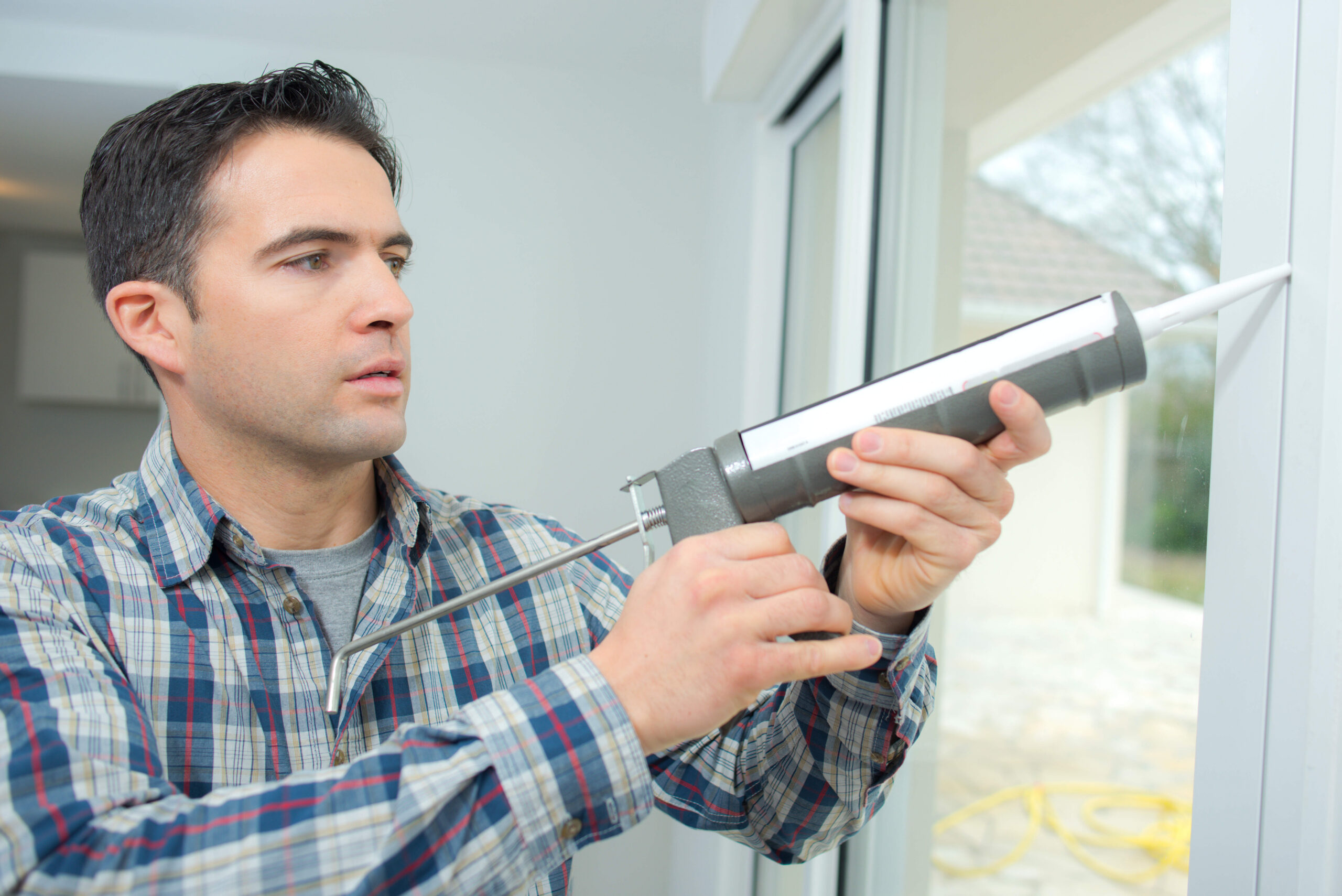
Weatherstripping applied to door frames, door sweeps installed at the base of doors, and acoustic caulk applied to gaps around trim, outlets, and pipe penetrations are all inexpensive interventions that can produce noticeable results for a relatively small investment. Door sweeps in particular are worth prioritizing for interior doors between rooms where sound separation matters — the gap at the base of a hollow-core interior door is typically the largest single sound pathway in a room, and a $10 to $20 sweep eliminates it entirely without any modification to the door itself. Home Depot’s weatherstripping and door hardware sections carry a range of products for exactly this application, and installation requires only a screwdriver and typically less than thirty minutes per door.
Windows are the most acoustically vulnerable element of most apartments and shared homes, particularly in older buildings where window frames have settled and seals have degraded. Beyond weatherstripping the frame, heavy lined curtains or cellular shades add a meaningful layer of acoustic mass at the window opening that reduces sound transmission without any permanent modification. Acoustic curtains — which are heavier and denser than standard curtains — are available at a range of price points and produce measurable sound reduction on street-facing windows. For windows in particularly noisy situations, a secondary layer of heavy curtains combined with well-sealed weatherstripping can reduce perceived street noise by a noticeable margin even without double-glazing or window inserts.
Wall Treatments That Work Without Permanent Modification
Treating walls for sound absorption is where most people assume they need to spend significant money on professional acoustic panels or foam, and where the gap between what’s marketed and what’s actually effective is considerable. Acoustic foam — the egg-crate or wedge-cut foam tiles sold for home recording — is effective at absorbing high-frequency sound within a room, reducing echo and reverberation, but does very little to prevent sound from passing through walls into adjacent spaces. Understanding this distinction prevents wasted spending: foam treats the acoustic character of a room but doesn’t meaningfully reduce sound transmission between rooms.
What does reduce sound transmission through walls, without construction, is added mass and absorption at the wall surface. Bookshelves filled with books placed against shared walls are among the most effective and aesthetically natural approaches available — the combination of the shelf structure, the books, and any soft items interspersed creates a multi-layered barrier that adds meaningful mass and absorption to a wall that would otherwise be a single layer of drywall. A floor-to-ceiling bookshelf covering most of a shared wall produces significantly better acoustic separation than the same wall without it. The effect is particularly pronounced in apartments where the shared wall is the primary transmission path for neighbor noise.
Wall-mounted fabric panels — either purchased as art or made inexpensively by stretching fabric over frames built from lumber and batting — add absorption without mass but are effective at reducing echo and reverberation within a room in ways that make external noise feel less intrusive even when they don’t reduce its volume. Hanging textiles, large canvas artwork, and even tapestries contribute to the same effect. A room that’s acoustically soft — where sounds decay quickly rather than bouncing and reverberating — is considerably more comfortable to inhabit in a noisy environment than a hard, reflective room receiving the same external sound levels.
Addressing the Specific Problem of Ceiling Noise
Noise from upstairs neighbors is consistently cited as one of the most disruptive elements of apartment living, and it’s also one of the hardest to address from below because the most effective solutions involve the floor above rather than the ceiling below. Without access to the floor above and without the ability to make structural modifications, the options available from the apartment below are more limited than they are for other noise problems — but they’re not nonexistent, and some combination of them produces meaningful improvement even in difficult situations.
Adding mass to the ceiling is the most direct approach available to a renter who can’t access the floor above, though the options are constrained by what can be done without damaging the ceiling surface. Ceiling-mounted fabric canopies and draped textiles — suspended from curtain rods or tension systems rather than attached directly to the ceiling — add some absorption and soft material between the ceiling and the living space. Acoustic cloud panels designed for suspension below the ceiling are commercially available and designed specifically for this application, adding mass and absorption without contact with the ceiling surface itself. While these approaches don’t eliminate impact noise from above, they reduce the reverberant contribution that makes ceiling noise feel so pervasive, which produces a meaningful improvement in perceived noise levels even without changing the actual transmission.
For impact noise specifically, the most effective advocacy available to a renter is a direct conversation with upstairs neighbors — ideally framed as a building acoustics issue rather than a behavior complaint — and a request that they add rugs to their hard floors. The reduction in impact noise generated by a well-rugged apartment above is substantially larger than anything achievable by the apartment below, which makes neighbor cooperation the highest-leverage single intervention available for this particular problem. The American Apartment Owners Association notes that most lease agreements include quiet enjoyment clauses that provide a framework for these conversations when informal approaches don’t produce results.
White Noise and Sound Masking as a Practical Complement
For noise problems that can’t be fully addressed at the source — traffic noise, unpredictable neighbor activity, shared wall sound that’s difficult to treat — sound masking is a practical complement to physical interventions rather than a substitute for them. White noise machines, fans, and sound masking apps work by raising the ambient sound floor of a room in a way that reduces the contrast between quiet background and intrusive noise peaks. Because it’s the sudden change in sound level — the contrast — that the brain registers as disruptive rather than steady background sound, masking the quiet background narrows the perceived difference and reduces the intrusive quality of noise that can’t be eliminated.
This approach is particularly effective for sleep, where the sensitivity to sudden sound is highest and where the disruption cost of individual noise events is most significant. A white noise machine placed near the bed — LectroFan and similar dedicated devices produce a more consistent masking sound than fan-based alternatives — costs between $30 and $60 and produces results that most users find immediately noticeable from the first night. For daytime use in home offices or study spaces, the same principle applies: a consistent background sound that raises the acoustic floor reduces the distraction impact of variable noise without requiring the space to be acoustically perfect.
The most effective overall approach to noise in apartments and shared homes combines physical interventions — sealing gaps, adding rugs and soft furnishings, treating walls and windows — with sound masking for the residual noise that physical measures can’t fully address. Neither approach alone produces the results that both together achieve, and the total investment for a meaningful improvement across both categories is typically well within reach for anyone willing to approach the problem systematically rather than hoping that a single product solves everything at once.
Sources:
- https://acousticalsociety.org/acoustic-basics/
- https://www.homedepot.com/b/Building-Materials-Sound-Proofing/N-5yc1vZcbis
- https://www.thespruce.com/soundproofing-your-apartment-cheaply-4144931
- https://www.american-apartment-owners-association.org/property-management/tenant-noise-complaints/
- https://www.bobvila.com/articles/soundproofing-walls/