Table of Contents
Small Backyard Upgrades That Make Outdoor Space Actually Usable
On it!
Small Backyard Upgrades That Make Outdoor Space Actually Usable
There’s a particular kind of frustration that comes with having a backyard you don’t actually use. The space exists, it has potential, and every spring you think about doing something with it — but the combination of unclear starting points, perceived cost, and the sheer open-endedness of outdoor improvement projects means that another season passes with the space functioning as little more than a view from the kitchen window. The gap between a backyard that exists and one that gets used consistently almost never comes down to square footage or budget. It comes down to a small number of specific changes that convert an undefined outdoor area into one that feels intentional, comfortable, and worth spending time in.
The Reason Most Backyards Go Unused
Before addressing specific upgrades, it’s worth understanding why so many backyards with real potential sit functionally empty. The most common reason isn’t lack of space or lack of interest — it’s that the space doesn’t have a clear anchor. An outdoor area without a defined focal point or functional zone reads as unfinished in the same way that a room without furniture does: technically present but not inviting, with no signal about where to sit, what to do, or how to begin using it. The outdoors adds additional barriers that indoor spaces don’t have — exposure to sun, wind, insects, and temperature — and a space that doesn’t address those barriers with even minimal solutions will consistently lose the competition for where to spend time against the climate-controlled interior.
The upgrades that actually change how much a backyard gets used aren’t necessarily the most visually dramatic ones. They’re the ones that remove the specific friction points that make going outside feel like more effort than it’s worth. A space with comfortable seating, manageable sun exposure, some degree of privacy, and adequate lighting for evening use gets used. A space without those things, regardless of how large or potentially attractive it is, doesn’t — and adding a garden or a decorative feature before solving the basic comfort and usability problems produces a high-maintenance space that still doesn’t get used consistently.
Define a Primary Seating Area First
The single most impactful change you can make to an underused backyard is defining a primary seating area — a zone that functions as the outdoor equivalent of a living room, with enough seating to be genuinely usable and enough definition to feel like a destination rather than just a spot in the yard. This doesn’t require a deck, a pergola, or any permanent construction. It requires surface definition and seating, both of which are achievable at modest cost.
An outdoor rug on a patio or even on a lawn area defines a zone visually and underfoot in the same way that a rug defines a seating area within a larger indoor room. Outdoor rugs designed for exterior use are available at a wide range of price points, resist moisture and UV exposure, and convert an ambiguous patch of patio or decking into something that reads clearly as a place to sit. Combined with two to four chairs and a small table, the defined zone creates the basic structure that makes a backyard feel furnished rather than empty. Furniture doesn’t need to be expensive to be functional — resin or metal furniture weathers well, requires minimal maintenance, and is available at price points that make furnishing a basic outdoor seating area achievable well under $300 for most configurations.
For yards without existing hard surfaces, gravel or decomposed granite laid within a defined border — edging stakes and landscape fabric underneath to control weeds — creates an inexpensive ground-level patio surface that drains well, requires minimal maintenance, and provides a stable, defined area for furniture without the cost or permanence of concrete or pavers. A 10-by-12-foot gravel patio can be installed for $100 to $200 in materials depending on local prices, and the project is manageable in a single weekend day with basic tools. This Old House’s gravel patio guide walks through the process clearly enough to make it accessible to anyone comfortable with basic outdoor labor.
Solve the Sun Problem Before Anything Else
Exposure to direct afternoon sun is the single most common reason comfortable outdoor furniture goes unused during the peak months when a backyard should be most enjoyable. A seating area in full afternoon sun in most parts of the country is simply too hot for comfortable extended use between roughly noon and five in the afternoon, which is precisely the window when outdoor entertaining and relaxation would otherwise happen. Addressing sun exposure doesn’t require permanent shade structures, and the solutions available at modest cost are effective enough to transform how usable a sun-exposed space is during peak hours.
A freestanding cantilever umbrella — the type with an offset pole that allows the canopy to extend over a seating area without a center post interfering with furniture arrangement — provides adjustable, repositionable shade that follows the sun’s angle when rotated and can be closed and stored when not needed. Quality cantilever umbrellas that hold up through multiple seasons are available from $150 to $400 depending on size and materials, a price point that’s accessible for most households and that pays for itself quickly in terms of how much more usable the covered area becomes. For a more permanent and less expensive solution, a shade sail — a tensioned fabric triangle or rectangle suspended between anchor points — provides consistent overhead coverage at a cost of $50 to $150 depending on size, and can be attached to existing fence posts, the house exterior, or freestanding poles set in ground anchors.
For spaces where afternoon western sun hits a seating area directly, a privacy screen or outdoor curtain panel on the sun-facing side provides both shade and visual enclosure that makes the space feel more sheltered without blocking air circulation. Outdoor curtain panels designed for UV and moisture exposure are available inexpensively and can be hung from a simple tension rod or cable system between two posts, creating a soft enclosure that dramatically changes the feel of an exposed patio.
Privacy Screens That Don’t Require a New Fence
The sense of being observed or exposed is one of the most consistent barriers to genuinely relaxing in an outdoor space, particularly in urban and suburban settings where neighboring yards, windows, and sightlines are close and unavoidable. Full fence replacement to address privacy is expensive and in many jurisdictions requires permits, but there are several lower-cost approaches that provide meaningful visual privacy for a defined seating area without replacing or modifying existing fence lines.
Lattice panels attached to an existing fence or freestanding on post supports create a partial visual barrier that can be combined with climbing plants for a natural, gradually improving privacy screen at very low initial cost. Bamboo or reed privacy screens, available in rolls at garden centers and home improvement stores, can be attached directly to chain-link or open wood fences to convert a see-through barrier into a solid visual screen for $30 to $80 per panel depending on size. These weather over time and eventually require replacement, but their low initial cost and immediate effectiveness make them one of the most practical privacy solutions for renters or for people uncertain about their long-term plans for the space.
Tall container plants — ornamental grasses, bamboo in large pots, or fast-growing shrubs in substantial planters — positioned along sightlines create a living privacy screen that improves over time and adds genuine visual interest to a space while serving a functional purpose. A row of three or four large ornamental grasses in substantial containers along a property line provides meaningful screening at eye level while seated, costs $100 to $200 in plants and containers, and requires far less commitment and expense than fence construction. The Spruce’s privacy plant guides identify the fastest-growing and most effective options for different climate zones, which is worth consulting before purchasing to ensure the plants you select will actually perform as expected in your specific conditions.
Lighting for Evening Use
A backyard without usable evening lighting is effectively a space that’s only available for half the hours in which you’d want to use it, and the addition of outdoor lighting is one of the upgrades most consistently cited as transformative by homeowners who make it. The visual quality of outdoor lighting in the evening is also what converts a backyard from functional to genuinely pleasant — the warm, low-level lighting that works best outdoors creates an atmosphere that overhead or harsh lighting never achieves, and it does so most effectively when it comes from multiple lower sources rather than a single bright fixture.
String lights are the most accessible and versatile outdoor lighting option available, and their reputation as merely decorative understates how effectively they provide genuine functional illumination for a defined outdoor area when positioned well. Strung overhead between two attachment points above a seating area, they provide warm ambient light that makes the space usable after dark while creating the kind of enclosed, comfortable atmosphere that makes an outdoor area feel like a room rather than a yard. Solar-powered string lights eliminate wiring entirely for installations where running electrical is impractical, though corded options connected to an outdoor outlet via a weatherproof extension cord provide more consistent brightness across varying light conditions.
Path lighting along walkways and garden edges defines the boundaries of outdoor spaces after dark and improves safety on steps and level changes simultaneously. Solar path lights require no wiring, are available for $2 to $10 per fixture, and install by pushing a stake into the ground — a project that takes minutes per light and instantly improves the finished quality of an outdoor space at minimal cost. For steps specifically, low-voltage LED step lights that install into the riser face of a deck or stair provide both safety and aesthetic definition that dramatically improves the nighttime appearance of a deck or raised patio, and many are available in solar-powered versions that require no electrical connection.
Surface and Ground Improvements That Cost Less Than Expected
The ground surface of a backyard has a larger effect on how the space feels and functions than most people give it credit for before they’ve experienced the difference. Bare dirt is unusable in wet conditions and unpleasant in dry ones. A patchy, weedy lawn requires maintenance effort without providing the clean, finished look that makes a space feel worth using. Hard surfaces that have heaved, cracked, or become uneven create both an unsightly and a mildly hazardous environment. Addressing the ground surface of the primary use area is often the change that most directly converts a space from avoided to used, and the options for doing so range from very inexpensive to moderately costly depending on the scale and permanence desired.
For existing concrete or patio surfaces that are in poor cosmetic condition but structurally sound, a concrete resurfacer applied with a squeegee and trowel converts a stained, worn surface into a clean, even one for $50 to $100 in materials for a typical patio area. For wooden decking that has weathered and grayed, a deck cleaner followed by a semi-transparent stain or sealer restores both appearance and weather resistance for $80 to $150 in products and a day of work, producing results that make an aging deck look well-maintained rather than neglected.
Artificial turf has come down dramatically in both cost and quality in recent years, and for small defined areas — a play zone for children, a patch between paving, or a small lawn area where growing and maintaining real grass is impractical — it provides a consistently green, low-maintenance surface that requires neither watering nor mowing. For a small backyard area of 100 to 200 square feet, artificial turf installed as a DIY project using products from Home Depot or similar retailers is achievable for $200 to $500 depending on the quality selected, producing a surface that performs reliably regardless of weather or season and that immediately improves the finished quality of a backyard that previously had a problematic lawn area.
Adding One Feature That Makes the Space Distinctly Yours
Beyond the functional baseline of comfortable seating, shade, privacy, and lighting, the upgrade that most consistently converts a backyard from one that’s usable into one that’s genuinely enjoyed is the addition of a single feature that makes the space feel personally meaningful rather than generically furnished. This is highly individual — for some households it’s a fire pit that extends outdoor use into cool evenings and creates a natural gathering point; for others it’s a water feature whose sound masks neighborhood noise and creates a specific atmosphere; for others it’s a raised garden bed that provides both activity and harvest. The specific choice matters less than the principle: a space that has one thing in it that you specifically wanted and that provides something you actively seek out has a fundamentally different relationship with the people who live there than one that’s simply set up adequately.
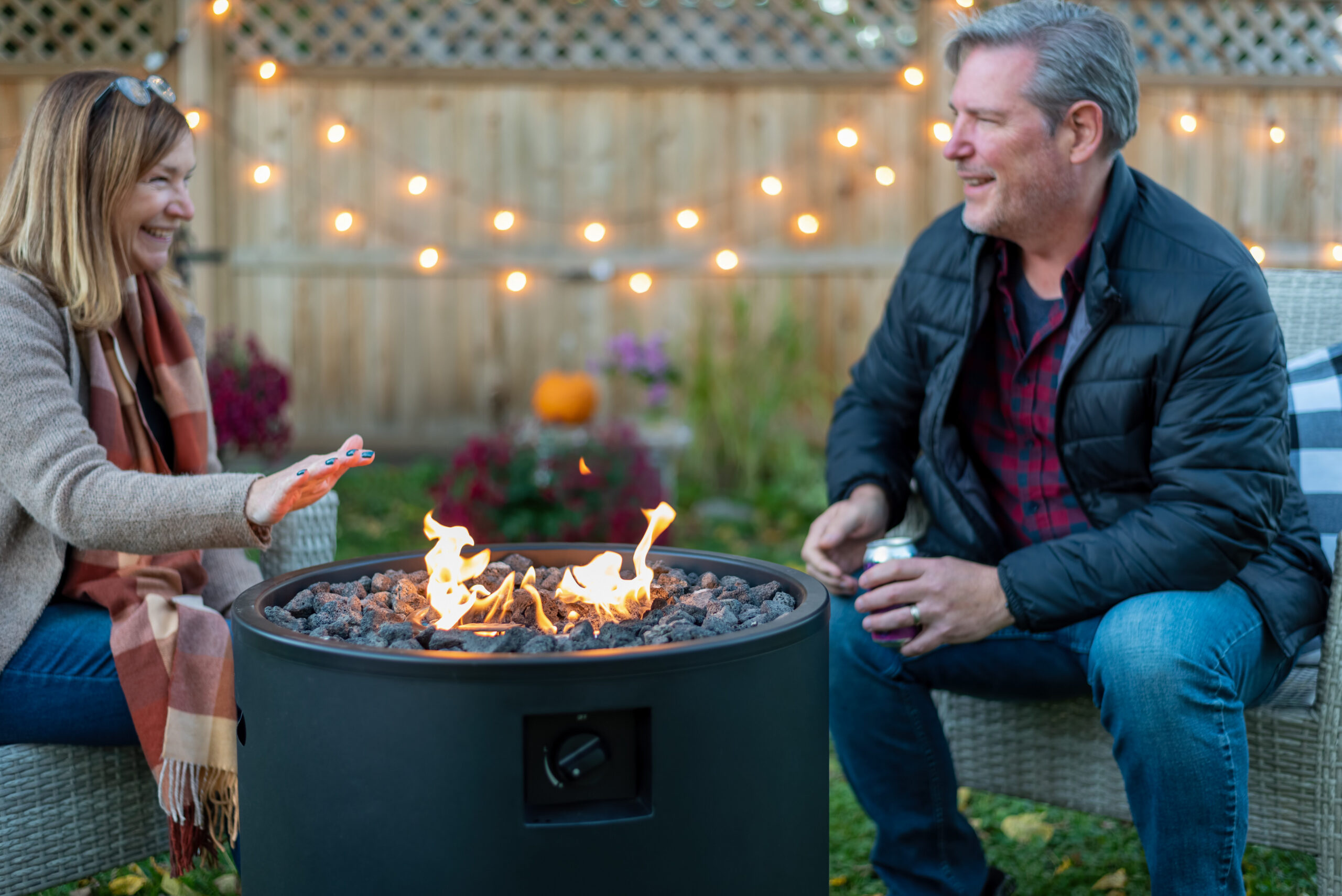
A propane or wood-burning fire pit is one of the most popular single additions to a backyard seating area, and with good reason — it extends comfortable outdoor use into temperatures that would otherwise drive people inside, creates a natural focal point that organizes seating around it, and produces the particular kind of relaxed social atmosphere that few other additions generate. Portable fire pits that require no installation and can be repositioned as needed are available from $50 to $200 depending on size and material, and in most jurisdictions don’t require permits when used within manufacturer guidelines. A single worthwhile addition, chosen for what it specifically adds to how your household uses outdoor space, is consistently worth more than a collection of generic upgrades that check boxes without creating anything you specifically wanted.
Sources:
https://www.bhg.com/gardening/landscaping-projects/landscape-basics/budget-backyard-ideas/
https://www.thisoldhouse.com/yards/21014698/how-to-build-a-gravel-patio
https://www.thespruce.com/best-plants-for-privacy-4767537
https://www.homedepot.com/b/Outdoors-Patio-Furniture/N-5yc1vZbx9v