Table of Contents
Low-Cost Outdoor Lighting Ideas That Make Your Yard Safer and More Inviting
Outdoor lighting is one of those upgrades that does double duty without most people realizing it. A well-lit yard makes it easier to get from the car to the front door without tripping, keeps steps and walkways visible for guests, and makes your home a less appealing target for anyone hoping to go unnoticed. At the same time, the right lighting turns a patio or backyard that sits empty after sunset into a space you actually use in the evening. The best part is that you don’t need an electrician or a big budget to get there. With some planning and a few affordable products, you can make your outdoor space safer and far more inviting in a single weekend.
Think in Layers Before You Buy Anything
The most common outdoor lighting mistake is buying a pack of fixtures, sticking them in the ground, and hoping for the best. A better approach is to walk your property after dark and notice where you actually need light. Start with safety, which means anywhere people walk, climb, or reach for a door handle. Next, consider security, meaning the dark corners, side yards, and entry points where you’d want light if you heard a noise at night. Finally, think about atmosphere, the spaces where you’d like to sit, eat, or relax outside. Lighting designers often describe this as layering, and it keeps you from overspending on one type of light while leaving important areas in the dark. Make a quick sketch of your yard and mark each area by priority. That simple step helps you buy only what you need and place it where it actually makes a difference.
Start With Paths, Steps, and Entryways
If your budget only covers one area, make it the routes people walk. Front walkways, porch steps, deck stairs, and the path from the driveway to the door are where most nighttime trips and falls happen, and they’re also where lighting makes the biggest first impression. Path lights should be spaced so they create overlapping pools of light on the ground rather than a runway of bright dots, and placing them on alternating sides of a walkway usually looks more natural than lining them up in a straight row. For steps, small fixtures mounted on the risers or on the side of the stairs light each tread directly, which is far more effective than a single bright light shining from above. At the front door, make sure the house number is visible from the street, which matters not just for guests and deliveries but for emergency responders trying to find your home quickly.
Get Realistic About Solar Lights
Solar lights are the most popular budget option because they need no wiring, cost very little to run, and can be installed in minutes. They’re a great fit for marking path edges, garden beds, and areas far from an outlet. That said, it helps to know what to expect so you aren’t disappointed. Inexpensive solar stakes often produce a soft glow rather than truly useful light, and their output drops noticeably in winter when days are shorter and the sun sits lower in the sky. Panels placed in shade or under trees may barely charge at all. If you go solar, look for fixtures with replaceable batteries and higher brightness ratings measured in lumens, and place them where the panel gets several hours of direct sun. Wiping the panels clean every few weeks also helps them charge more effectively. Used for the right job, solar lights are a fantastic value, but for steps and entryways where you really need to see, a wired or plug-in option is usually more dependable.
Consider Low-Voltage Lighting as a Step Up
Low-voltage landscape lighting sits in a sweet spot between cheap solar stakes and professionally hardwired systems. These kits use a transformer that plugs into a standard outdoor outlet and steps the power down to a safe, low voltage, so homeowners can run the cable themselves without electrical experience. The cable can be laid on the ground and tucked under mulch or buried a few inches deep, and fixtures simply clip onto it wherever you want them. Many transformers include timers or photocells that switch the lights on at dusk and off at a set hour, which means you never have to think about them. Pairing a low-voltage system with LED fixtures keeps energy costs low and means you’ll rarely replace bulbs. For homeowners who want consistent, reliable light along paths and around landscaping, this is often the best value over the long term.
Use Motion Sensors Where Security Matters
For side yards, garage doors, back entrances, and other spots where you don’t need light all night, motion-activated fixtures are both practical and economical. They stay off until someone walks into range, then flood the area with bright light, which is exactly what you want when you’re carrying groceries in from the car or checking on a noise in the backyard. Many affordable models are battery-powered or solar-powered, so they can go almost anywhere, while wired versions can often replace an existing fixture with a basic swap. Adjust the sensitivity and aim carefully so the light isn’t triggered every time a car passes on the street or a tree branch moves in the wind. A motion light that clicks on constantly becomes background noise for you and your neighbors, while one that turns on only when someone is actually there gets your attention.
Add Warmth to Patios and Decks
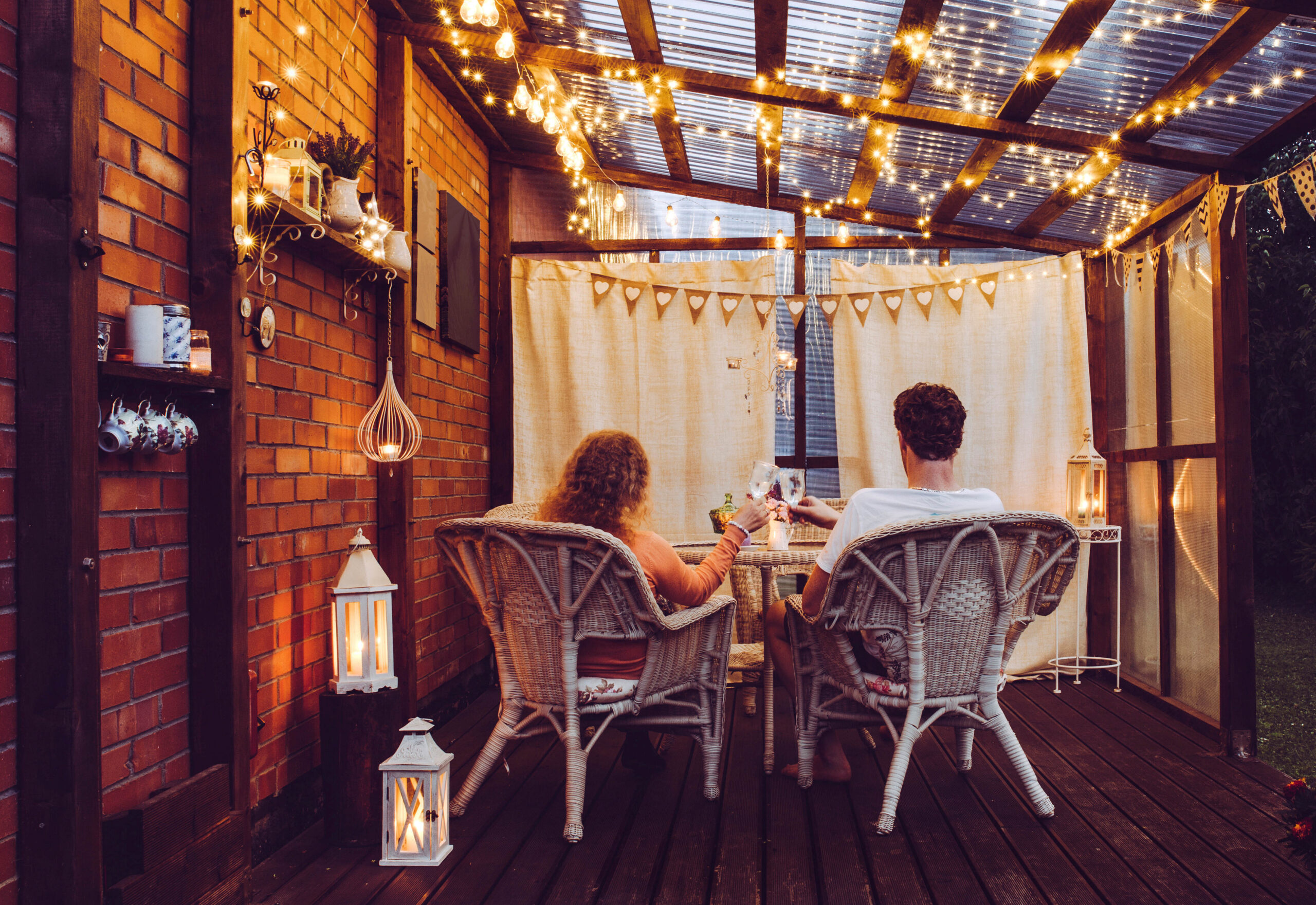
Once safety is covered, the fun part is making outdoor living spaces feel welcoming after dark. String lights are the most affordable way to do this, and they can transform a plain patio, deck, or pergola into a cozy outdoor room. Look for outdoor-rated strings with shatter-resistant bulbs, and hang them from sturdy anchor points using guide wire so they don’t sag or pull loose in the wind. Warm white light, rather than cool blue-white, creates a more relaxing atmosphere and flatters both people and plants. Lanterns, tabletop LED candles, and a few uplights aimed at a favorite tree or textured wall can add depth without much expense. Putting patio lighting on a dimmer or a smart plug lets you adjust the mood and turn everything off from your phone when you head inside.
Avoid the Mistakes That Waste Money
Good outdoor lighting is more about placement than brightness. Overly bright fixtures create harsh glare that actually makes it harder to see, because your eyes struggle to adjust between brilliant spots and deep shadows. Floodlights aimed straight out from the house can blind guests walking up the driveway and spill into neighbors’ windows, which is a quick way to create friction next door. Aim fixtures downward and toward the area you want lit, and choose shielded designs that keep light from shining into the sky. This approach reduces light pollution, keeps your yard looking more natural, and focuses every dollar of lighting where it’s actually useful. It’s also worth buying a few quality fixtures instead of a large pack of flimsy ones, since cheap housings tend to crack, fade, and let in water within a season or two.
Keep Your Lights Working Year After Year
A little maintenance keeps outdoor lighting looking good and working reliably. Check fixtures each spring and fall for loose connections, cracked lenses, and buildup from dirt, pollen, or spider webs that dims their output. Trim plants that have grown over path lights, and readjust fixtures that have been knocked out of place by lawn mowers or snow shovels. For low-voltage systems, make sure the cable stays covered and hasn’t been nicked by garden tools. If you live somewhere with real winters, consider which solar fixtures to bring indoors during the darkest months to extend their lifespan. Taking an hour twice a year to look things over means your lighting keeps doing its job, keeping your family safe, your home secure, and your yard ready to enjoy long after the sun goes down.